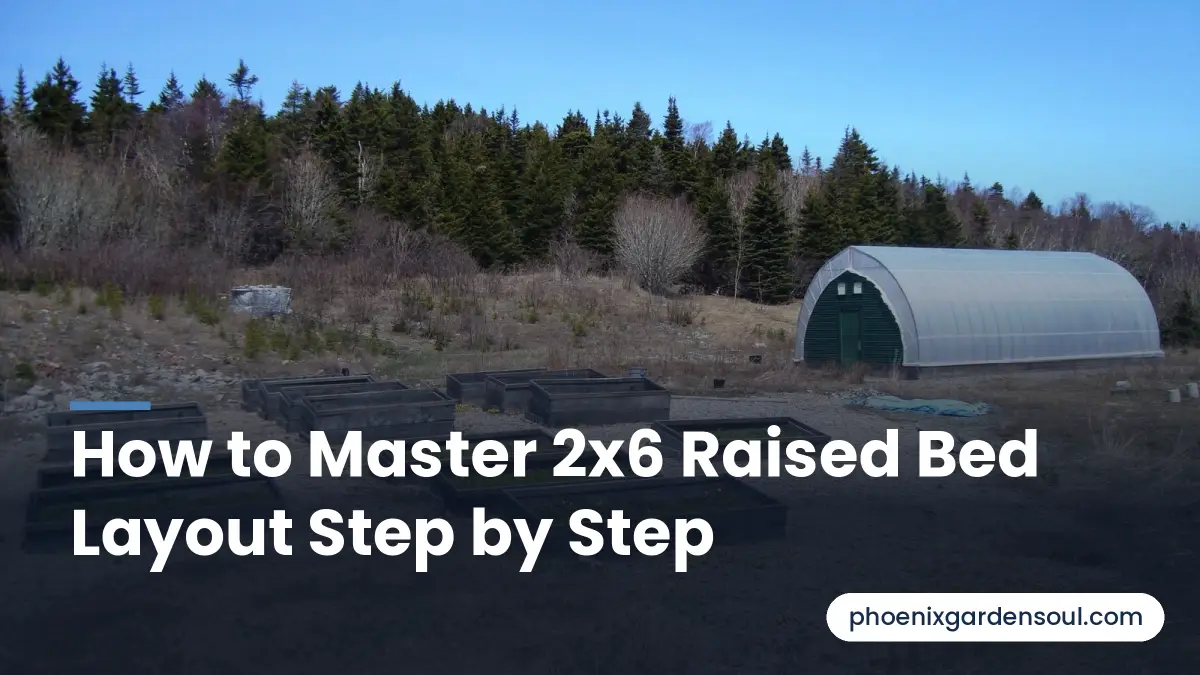
How to Master 2×6 Raised Bed Layout Step by Step
As an Amazon Associate we earn from qualifying purchases. Guides are for general information; always check your owner's manual and consult a qualified mechanic when unsure.
A 2×6 raised bed layout shapes how your garden grows and feels. The way you place your boards changes everything. It affects soil depth, plant spacing, and even how much work you face each season. You might think a bed is just a bed. But the choice to run boards long or short makes a big difference.
A 2×6 raised bed layout can fit more plants or fewer plants. It can hold deep roots or shallow roots. The true size of a 2×6 board is 1.5 by 5.5 inches. That small fact shifts every plan you make. We will walk through the key choices now. Always follow official safety and maintenance guidelines for best results.
Why Board Orientation Defines Every 2×6 Raised Bed Layout Decision
Board direction sets the shape of your whole plot. Running boards long ways makes a narrow bed. Running them short ways makes a wide bed. Each path leads to a different garden life. A long narrow bed fits tight rows. A wide short bed suits wide plants like squash.
The 2×6 raised bed layout you pick depends on what you want to grow. A bed on its long side holds more soil volume per foot of length. A bed on its short side gives you wider access from both edges. Access matters when you weed or harvest. You do not want to step on soil and pack it down.
- Long-Ways Orientation: Places the 5.5-inch face up and down. This makes the bed longer and narrower. It holds more soil per linear foot. It suits crops planted in straight rows.
- Short-Ways Orientation: Places the 5.5-inch face side to side. This makes the bed shorter and wider. It gives easy reach to the middle. It works well for wide-spreading plants.
- Access Width: A bed over 4 feet wide forces you to reach inward. That can crush soil near the center. Keep total width at or under 4 feet.
- Crop Fit: Tall plants like tomatoes need rows. Bush plants like peppers fit tight blocks. Match the board run to your crop style.
Think about your back and knees too. A bed you can reach across saves strain. A bed that is too wide adds work. The 2×6 raised bed layout should match your body and your yard shape. A small urban patch suits a long narrow run. A big backyard can handle a wider short bed.
True Dimensions and Soil Volume Math for a 2×6 Raised Bed Layout
A 2×6 board is really 1.5 by 5.5 inches. Store boards say 2 by 6, but that is not the true size. The true depth of your bed is 5.5 inches. That number drives how much soil you buy. Soil depth matters for root growth. Shallow beds dry out fast.
Deep beds hold moisture longer. A 2×6 raised bed layout with 5.5-inch depth works for most greens and roots. You need more soil than you think. A single 4×8 foot bed holds about 16 cubic feet of soil. That is roughly 10 to 12 big bags. You can mix your own blend with topsoil, compost, and a light filler like perlite.
Board length changes the math too. An 8-foot board gives you 8 feet of bed length. A 10-foot board adds two more feet of grow space. You can also link boards to make longer beds.
But longer beds need more bracing. The soil weight pushes outward on the sides. A 2×6 raised bed layout over 8 feet long may bow in the middle without support. Use stakes or a center brace to keep walls firm.
- True Board Size: 1.5 inches thick by 5.5 inches deep. Use 5.5 for all soil depth math.
- Soil Volume Per Foot: Multiply bed width by depth by 1 foot of length. A 4×8 bed holds 16 cubic feet of soil.
- Bag Math: Most bagged soil is 1.5 cubic feet. You need about 11 bags for a standard 4×8 bed.
- Board Length Impact: 8-foot boards are common. 10 or 12-foot boards add space but need extra bracing in the middle.
The true 1.5-inch thickness of the board sets your wall height.
That height determines how deep your soil sits. Soil depth is the single most ignored part of a 2×6 raised bed layout. Check it twice before you buy a single bag.
Crop Spacing and Planting Plans That Fit a 2×6 Raised Bed Layout
Spacing rules shift when you use 2×6 boards. The bed width and depth set how many plants fit in each square. A 4×8 foot bed gives you 32 square feet of space. You can plant 16 heads of lettuce or 9 tomato plants in that space. The key is to match the crop to the bed depth. Leafy greens and herbs do fine in 5.5 inches of soil.
Carrots and radishes also do well. But large roots like deep carrots need more depth. A 2×6 raised bed layout works best for crops that fit in 4 to 6 inches of root space. You can stretch the depth with a 2×6 bottom layer and a 2×4 top layer. That gives you a 9.5-inch soil depth. It opens the bed to more crops.
Square foot gardening is a great fit for this bed size. You divide the 4×8 space into 1-foot squares. Each square gets a set number of plants. One tomato per square. Four lettuce per square.
Nine spinach per square. The 2×6 raised bed layout makes these grids easy to plan. The narrow board width means you can fit more squares per row. You lose less space to paths between boards. You gain more growing room inside the bed.
- Leafy Greens: Lettuce, spinach, and kale fit well in 5.5-inch depth. Plant 4 to 9 per square foot depending on the variety.
- Root Crops: Radishes and short carrots thrive in 6 inches of soil. A 2×6 bed suits them without extra depth.
- Fruiting Plants: Tomatoes and peppers need 1 square foot each. They need full sun and good drainage from the 5.5-inch depth.
- Bush Beans: These fit 9 plants per square foot. They fill a 2×6 bed fast and fix nitrogen in the soil.
Plan your planting map before you fill the bed. A quick sketch saves time and seed later. Mark the tall plants on the north side. This keeps them from shading shorter plants. The 2×6 raised bed layout gives you a clean grid to work with. Use that grid to plant tight and harvest more from each square.
Corner Joinery and Structural Bracing for a 2×6 Raised Bed Layout
Strong corners hold the whole frame together. A 2×6 raised bed layout faces unique stress at the joints. The boards are narrow enough to split under pressure.
You have several solid joinery options. Each method offers different strength and ease. Your choice shapes the bed’s lifespan and stability.
- Screw-Driven Butt Joint: Use two 3-inch deck screws per corner. Pre-drill to stop the wood from splitting. This method works well for beds under 4 feet wide.
- Internal Corner Bracket: Metal L-brackets add rigidity. They sit inside the frame where boards meet. Brackets handle lateral push from bowing boards.
- Dowel Pin Lock: Glue and pin two boards at the corner. This creates a tight, flush joint. It looks clean and resists pulling apart.
- Half-Lap Notch: Cut away half the thickness of each board. The pieces overlap and form a tight corner. This method needs a hand saw or router.
Bracing stops long walls from bowing outward. A 2×6 raised bed layout needs stakes or cross-braces on beds longer than 6 feet. Without bracing, soil weight pushes the sides out. This causes gaps at the corners over time.
Place stakes on the outside of the bed. Drive them into the ground at every other board seam. Use galvanized straps to tie the boards to the stakes. This stops the frame from leaning.
Orientation Trade-Offs: Long-Ways vs Short-Ways for a 2×6 Raised Bed Layout
Board direction changes soil depth and plant space. Running boards long-ways means the 5.5-inch width faces up. Running boards short-ways means the 1.5-inch width faces up. Each path gives you a different growing surface.
- Long-Ways Layout: A long-ways layout gives you a deep bed of 5.5 inches.
- This Suits Root: This suits root crops like carrots and potatoes well.
- Soil Warms Faster: The soil warms faster in spring, too.
A short-ways layout gives you only 1.5 inches of soil depth. You will need to fill the bed with more soil mix. This raises the cost and weight of the frame. But it offers a wider flat planting surface on top.
The long-ways path is the most common choice. It uses fewer boards per square foot of growing space. The short-ways path works best for shallow-rooted greens. It also fits tight spaces where width matters more than depth.
| Aspect | Long-Ways (5.5″ Depth) | Short-Ways (1.5″ Depth) |
|---|---|---|
| Soil Depth | 5.5 inches | 1.5 inches |
| Boards Needed (8′ bed) | 3 boards per side | 5+ boards per side |
| Best Crops | Carrots, potatoes, tomatoes | Lettuce, spinach, herbs |
| Cost per 4×8 Bed | Lower | Higher (more lumber) |
| Root Space | Deep and generous | Shallow; limits root crops |
Pick the orientation based on what you want to grow. A 2×6 raised bed layout should match your crop list. Check the root depth of your target plants first.
Drainage, Soil Depth, and Maintenance Cycles for a 2×6 Raised Bed Layout
Water moves fast through a 2×6 bed. The narrow width means the soil dries out quicker than in-ground plots. You will water more often during hot spells.
- Good Drainage Starts: Good drainage starts with the right soil mix.
- Use a Blend: Use a blend of topsoil, compost, and coarse vermiculite.
- This Mix: This mix drains well but holds enough moisture for roots.
- Avoid Packing: Avoid packing the soil too tight.
- Dense Soil Blocks: Dense soil blocks water flow and air pockets.
Soil depth shapes what you can grow. A 2×6 raised bed layout with long-ways boards gives you 5.5 inches. This works for most greens and herbs. For deep-rooted plants, add a layer of loose mulch on top. You can also build a second tier of boards to add depth.
Upkeep keeps the bed productive year after year. Top-dress the bed with 1 to 2 inches of fresh compost each spring. Check the boards for rot or warping every fall. Replace any board that bends more than a quarter inch.
Flush the soil with a deep watering once a month. This washes out salt buildup from fertilizers. It also refreshes the soil structure and prevents compaction.
2×6 Raised Bed Layout Quick Reference
| Spec | Long-Ways Layout | Short-Ways Layout |
|---|---|---|
| True Board Size | 1.5″ x 5.5″ | 1.5″ x 5.5″ |
| Soil Depth | 5.5 inches | 1.5 inches |
| Screws per Corner | Two 3-inch deck screws | Two 3-inch deck screws |
| Bracing Needed | At 6+ feet length | At 4+ feet length |
| Ideal Crops | Carrots, tomatoes, squash | Lettuce, basil, radish |
| Lumber Cost (4×8 ft) | ~$28-$35 USD | ~$40-$50 USD |
| Watering Frequency | Every 2-3 days | Daily in summer heat |
Common Questions About 2×6 Raised Bed Layouts
Can I Use a 2×6 Raised Bed Layout for Tomatoes?
Yes, but use the long-ways board orientation. Tomatoes need deep roots, and the 5.5-inch depth works well. Add a stake or cage at planting time. The bed warms up fast, which tomatoes love.
How Many 2×6 Boards Do I Need for a 4×8 Bed?
- You Need Three: You need three 8-foot boards per side for the long-ways layout.
- That Is Twelve: That is twelve 8-foot boards total.
- For the Short-Ways: For the short-ways layout, you need five boards per side.
- Buy an Extra: Buy an extra board for cuts and mistakes.
Does a 2×6 Raised Bed Layout Need a Bottom Liner?
No, a bottom liner is not needed. The open bottom lets worms enter and drain freely. Liner can trap water and cause root rot. Skip the plastic sheeting under the bed.
What Is the Best Wood for a 2×6 Raised Bed Layout?
Cedar and redwood are the top choices. They resist rot for 10 to 15 years. Avoid pressure-treated pine where the soil touches the wood. The chemicals can seep into your crops.
How Often Should I Refill Soil in a 2×6 Raised Bed Layout?
Top up with compost every spring. Full soil spare is rarely needed. The organic matter breaks down slowly. A 2×6 raised bed layout loses less soil than wider beds due to its narrow width.
Final Thoughts and Next Steps
Planning a 2×6 raised bed layout starts with knowing your goals. Pick the board direction that fits your crops and space. Match the corner joinery to your tools and skill level. Strong corners and simple bracing will last for years.
Start with one bed and learn from it. You will see how the soil drains and what grows best. The 2×6 raised bed layout offers a flexible frame you can adapt each season. Build it right, and it will feed you for a long time. Keep the soil healthy, and the bed will keep giving back.