Can Plants Grow Under LED Lights for Beginners
As an Amazon Associate we earn from qualifying purchases. Guides are for general information; always check your owner's manual and consult a qualified mechanic when unsure.
Yes, plants can grow under LED lights. When it comes to can plants grow under led lights, having steady, tested guidance makes all the difference. You just need to match the light to the plant’s needs. LED tech changed indoor growing. It gave us control over color, heat, and day length.
Sunlight hits leaves and starts photosynthesis. Chlorophyll grabs red and blue light best. LEDs can send out just those colors. That means strong growth with less wasted energy. Always follow official safety and maintenance guidelines for best results.
Not all LEDs work the same. Cheap bulbs may lack key wavelengths. You need a light that covers the full range. Think of it like a balanced diet for your plants. We’ve seen houseplants thrive under desk LEDs. We’ve also seen herbs bolt under weak strips. The key is knowing what your specific plants need. You can’t guess. You have to check the specs.
Can plants grow under LED lights in a dark room? Yes, if you give them enough intensity and the right colors. A spare bedroom or closet works fine. You just need a good light plan.
Spectral Engineering: Matching LED Wavelengths to Chlorophyll Absorption Peaks
Plants use light in specific bands. Chlorophyll a and b pull in red and blue photons. Green light mostly bounces off. That is why leaves look green to us.
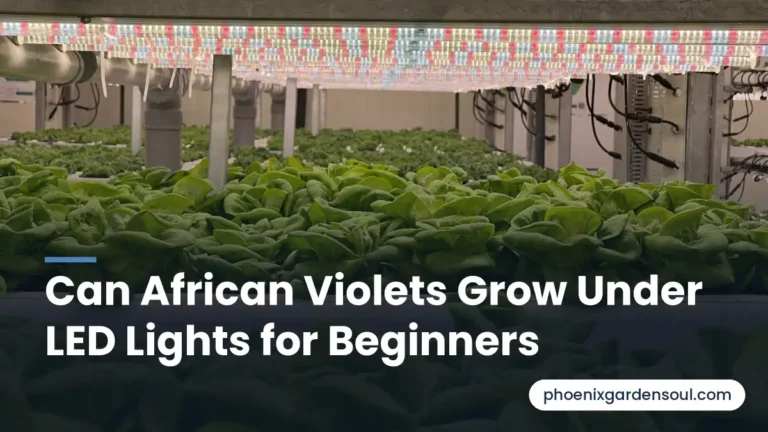
Red light at 660nm drives flowering. It tells a plant to bloom. Blue light at 450nm controls shape. It keeps stems short and leaves broad. You need both for healthy growth. For complementary picks and expert testing advice, see our guide on Can African Violets Grow Under LED Lights for Beginners.
Some LEDs give you a fixed mix. Others let you shift the ratio. Fixed lights work for one crop type. Flex lights let you change as plants grow. That is a big edge indoors.
Far-red light around 730nm also matters. It triggers shade-avoidance responses. Plants stretch tall to compete. Too much far-red can make your plants leggy. Balance is the real skill here.
- Red 660nm Peak: Drives flowering and fruit production in most species.
- Blue 450nm Peak: Controls compact growth and dark green leaf color.
- Far-Red 730nm: Triggers stem stretch. Use it sparingly or with care.
- White 5000K-6500K: Fills gaps and aids human viewing of the plant canopy.
- Green 520nm: Penetrates deeper into lower leaves. A small amount helps.
Can plants grow under LED lights with only red and blue? Yes, but they may look odd. Purple or pink light looks harsh. Plants still photosynthesize well. But white light helps you spot pests or nutrient issues faster.
Measuring Real Performance: Ppfd, Ppf, and the Inverse Square Law for Indoor Gardens
Lumens measure light for human eyes. They do not measure plant food. Plants need photosynthetically active radiation. That is called PAR. It covers 400nm to 700nm wavelengths.
PPF measures total photons a light makes. PPFD measures how many hit a square meter. A high PPF does not mean good coverage. The light might spread too thin. You need both numbers to compare LEDs fairly.
The inverse square law is simple. Light fades fast with distance. Double the space from the bulb. You get one quarter of the intensity. That is why hanging height matters so much.
You cannot guess with numbers alone. A PAR meter or quantum sensor gives real readings. You point it at the canopy. You see the exact PPFD value. This helps you place each light right.
- Quantum Sensor: Measures true PPFD in micromoles per square meter per second.
- PAr Meter: Gives a quick read of light intensity at the leaf surface.
- Hanging Height: Raise or lower the light to hit your target PPFD.
- PPF Value: Tells you the bulb’s total output, not the light at the plant.
- Coverage Map: Shows how evenly the light spreads across your grow space.
Can plants grow under LED lights with low PPFD? Yes, but growth slows. Lettuce needs around 150 to 250 µmol/m²/s. Tomatoes want 400 to 600 or more. Know your crop’s target. Then set your light to hit it.
Failure Modes and Photobiological Damage: Light Burn, Etiolation, and Photoperiod Disruption
Too much light harms plants just like too little does. LED chips can push intense heat into leaf tissue. That heat causes light burn even when the air feels cool. You will see bleached or brown spots on upper leaves. The damage often looks like nutrient deficiency at first glance.
Etiolation tells you the light is too weak or too far away. Stems stretch thin and pale. Leaves turn small and yellow. The plant reaches for photons it cannot catch. This weak growth invites rot and pest issues fast.
- Light Burn: Bleached leaf tips signal excess photon flux at the surface.
- Etiolation: Thin pale stems show the plant starves for usable light.
- Photoperiod Clash: Incorrect dark hours disrupt flowering signals in short-day plants.
- Driver Failure: A failing LED driver causes flicker that stresses chloroplasts.
- Spectral Shock: Sudden big shifts in red-blue ratio slow growth temporarily.
Photoperiod disruption breaks a plant’s internal clock. Many species need strict dark periods to bloom. Even small light leaks during the night cycle can reset this timer. The result is delayed or failed flowering. You must seal your grow space from stray light at night.
Species-Specific Lighting Protocols From Vegetative to Flowering Stages
Different plants need different light recipes at each stage. A leafy green like lettuce thrives under moderate blue-heavy light. It stays compact and builds dense chlorophyll. A fruiting pepper plant needs strong red light to set blooms. The same fixture may not serve both species well without adjustments.
You can split your grow space into zones with different spectra. Use a full-spectrum panel for general foliage work. Add a separate red-boost bar for plants entering flower. This approach mimics how sunlight shifts through the seasons. Each zone gets the exact signal it needs at that moment.
- Leafy Greens: 18 hours of moderate blue light keeps lettuce tight and dark.
- Herb Plants: Basil and cilantro want a balanced 50/50 red-blue split.
- Fruiting Crops: Peppers and tomatoes demand high red levels during bloom.
- Seedlings: Young seedlings need low intensity to avoid stretching or burn.
- Propagation: Clones root better under soft blue-dominant light at 12 to 18 inches.
You can adjust your schedule as the plant matures. Seedlings start under 16 hours of light. Move them to 12 hours of light to trigger flowering. Watch for nodes spacing and leaf angle. Those signs tell you whether to push more light or back off.
Start with a simple two-week test cycle. Run a fixed schedule and take photos each day. Note leaf color, stem thickness, and height gain. Compare the results to the plant’s natural growth outdoors. This baseline helps you spot problems early. It also tells you when to change the spectrum or intensity.
Operational Calibration: Photoperiods, Dimming Schedules, and Environmental Synergy
Setting a timer is only the first step. You must tune the dimmer to match the growth phase. Many modern LED fixtures support 0 to 10 volt dimming. You can start seedlings at 30 percent power. Then ramp to 60 percent for vegetative growth. Push to 80 or 100 percent for heavy blooming.
Light works hand in hand with heat and CO2. High light levels raise leaf heat. You may need to drop the room temp by 2 to 3 degrees. Without enough CO2, high light just creates wasted energy. Plants then burn through sugars faster than they can make them.
- Timer Setup: Use a steady digital timer with minute-level precision for dark cycles.
- Dimming Curve: Gradual ramps over 15 minutes prevent shock during power shifts.
- Airflow Check: Fans must move air across the canopy to cool hot spots.
- CO2 Matching: Add CO2 only when light intensity exceeds 600 micromoles per second.
- Daily Log: Write down light hours, dimmer percent, and leaf response each day.
You can also use a PAR meter to check your setup. Measure light at the canopy level. Move the sensor to different spots under the fixture. This reveals dead zones or hot spots. You can then adjust height or add a second fixture to balance the coverage.
Can plants grow under LED lights in any home setup? Yes, but the answer depends on steady calibration. A single fixture on a basic timer works for a small herb shelf. A full indoor garden needs careful dimming, proper distance, and clean dark cycles. You must treat light as a living input, not a fixed setting.
Comparing LED Grow Light Specifications and Materials
Not all LED chips are built the same. Bridgelux, Samsung, and Cree each offer different speed ratings. Look for chips rated above 2.0 µmol per joule. That number tells you how much usable light you get per watt of power. Higher efficacy means lower heat and lower electricity bills over time. For complementary picks and expert testing advice, see our guide on Can Colored Lights Affect How Plants Grow for Beginners.
Heat sinks matter just as much as the chips themselves. A poorly designed sink traps warmth near the bulb. That warmth shortens the life of the LED. It also dries out your growing medium faster. Look for fixtures with aluminum fins or active fan cooling. Quiet fans are a bonus for indoor spaces.
The driver is the brain behind the light. A constant-current driver keeps output stable. It prevents flicker that stresses plants. Mean Well and Inventronics are trusted brands in the grow light world. Check for a UL or CE listed driver. That ensures the unit meets safety and power standards.
Build quality also affects long-term trust. Look for rust-proof housings and UV-resistant lenses. Cheap plastic covers yellow over time. That cuts the light output by a large margin. A solid fixture can last five years or more with basic care.
- Chip Efficacy: Pick LEDs rated above 2.0 µmol per joule for best output.
- Heat Management: Choose aluminum housings or active fan cooling for long life.
- Driver Quality: Select UL listed constant-current drivers to prevent flicker.
- Lens Type: Glass or polycarbonate lenses outlast soft plastic covers.
- Warranty: A three-year warranty often signals a well-built fixture.
Can plants grow under LED lights with a cheap fixture? Yes, but the results will lag. You may see weak stems and pale leaves. Upgrading to a quality panel pays off fast. Better light means faster growth and higher yields each season.
Common Pitfalls and How to Avoid Them
Many growers make the same mistakes when they start. One common error is hanging lights too high. The result is weak, stretched plants. Another is using a timer with poor accuracy. Even a five-minute drift can disrupt flowering in sensitive species.
Some people ignore the dark cycle entirely. They leave a dim night light on in the grow room. That stray light can confuse short-day plants. It delays or stops bloom signals. Always seal your space from any light leaks at night.
Overwatering under strong LEDs is also a real risk. The light dries the soil faster than you expect. Check the moisture level daily. Stick your finger an inch into the soil. If it feels dry, water the plant. If it feels damp, wait another day.
Nutrient burn often follows light burn. When leaves bleach, new growers add more fertilizer. That makes the problem worse. Flush the soil with clean water first. Then reduce the nutrient dose by half for a week.
- Light Too High: Causes stretching and weak stems across the canopy.
- Timer Drift: Disrupts photoperiods and delays flowering in sensitive crops.
- Night Light Leaks: Confuses short-day plants and halts bloom signals.
- Overwatering: Leads to root rot when transpiration drops under cool LEDs.
- Extra Nutrients: Worsens salt buildup after light stress damages roots.
Daily and Weekly Routines for Healthy Growth Under Leds
A simple routine keeps your indoor garden on track. Start each morning by checking the timer and dimmer setting. Look for any error codes on the fixture. A steady light schedule builds trust with your plants.
Walk the canopy every two to three days. Look at the newest leaves for color and size. Pale tips often mean the light is too strong. Small, stretched leaves mean the light is too weak. Adjust height or dimmer settings based on what you see.
Once a week, clean the light panels with a dry cloth. Dust blocks light output and lowers speed. Check the hanging cords for fraying or heat damage. Tighten any loose screws on the reflector or housing.
Keep a simple logbook for your grow room. Note the light hours, dimmer percent, and any plant changes. Over time, this log becomes your best growing guide. You will spot patterns you would or else miss.
- Morning Check: Check timer accuracy and inspect the fixture for errors.
- Canopy Walk: Look for color shifts, stretching, or leaf curl.
- Weekly Cleaning: Wipe panels with a dry cloth to remove dust.
- Logbook Entry: Record hours, dimmer percent, and leaf response daily.
- Monthly Review: Compare growth rates and adjust the light plan.
Troubleshooting Slow Growth and Color Problems
Slow growth under LEDs usually has three causes. The first is low light intensity. The second is the wrong spectrum. The third is a heat problem. Check each one in order to find the fix.
If your plant looks pale green, it may need more blue light. Blue light drives chlorophyll production and keeps leaves dense. If the plant has dark green leaves but long stems, it needs more red. Red light fuels cell expansion and stem growth. For complementary picks and expert testing advice, see our guide on Can Black Lights Grow Plants Tips and Best Practices.
Heat swings also slow plants down. LEDs run cool, but the room may still be too hot or cold. Most crops do best between 65 and 75 degrees Fahrenheit. Use a small thermometer at canopy level to track the air.
Pest problems can look like light damage. Spider mites cause yellow speckles on leaves. Thrips leave silver streaks. Check the undersides of leaves with a magnifying glass. Treat pests early so they do not stress the plant further.
- Pale Leaves: Add more blue light or lower the light intensity slightly.
- Long Stems: Increase red light ratio to boost stem and flower growth.
- High Heat: Lower the room heat by 2 to 3 degrees for relief.
- Pest Signs: Inspect leaf undersides and treat with insecticidal soap.
- pH Issues: Test the soil pH. Keep it between 6.0 and 7.0 for most plants.
| Spec or Material | Budget Option | Mid-Range Option | Premium Option |
|---|---|---|---|
| Diode Chip | BridgeLux or generic epistar | Samsung LM301B | Samsung LM301H or Osram Oslon |
| Driver | Basic constant-voltage driver | Mean Well LPF series | Mean Well HLG or programmable driver |
| Spectrum Type | Fixed 3500K warm white | Full spectrum with 660nm red | Adjustable spectrum with 730nm far-red |
| Heat Sink | Plastic housing with small fins | Aluminum fins with fan | Large aluminum passive heatsink |
| Expected Lifespan | 15,000 to 20,000 hours | 30,000 to 50,000 hours | 50,000+ hours with driver replacement |
Frequently Asked Questions
Can Plants Grow Under LED Lights in a Windowless Room?
Yes, they can. You just need to match the light intensity and spectrum to the plant type. A full-spectrum LED panel provides the wavelengths leaves need for photosynthesis. Add a timer to keep the photoperiod steady. Without natural light cues, the timer becomes your plant’s clock.
How Close Should LED Grow Lights Be to Plant Leaves?
Start at about 18 to 24 inches above the canopy. Watch the top leaves for any curling or bleaching over the next two days. If the plant looks healthy, you can lower the light a few inches. High-wattage fixtures need more distance than low-power panels.
Do LED Grow Lights Use a Lot of Electricity?
They use far less than old HID fixtures. A 200-watt LED panel often replaces a 400-watt HPS lamp. Your actual draw depends on the dimmer setting and driver speed. Check the fixture label for true wattage before you buy.
Can I Use Regular White LED Bulbs to Grow Plants?
Standard bulbs give off light that looks bright to us. But they lack the deep red and blue peaks plants need. You may see weak, stretched growth with regular bulbs. Purpose-built grow LEDs fill those spectral gaps for strong, compact plants.
What Happens If I Leave LED Grow Lights on 24 Hours a Day?
Most plants need a dark period to rest and process energy. Constant light can cause stress and slow flowering. Some seedlings tolerate 24 hours briefly, but mature plants need a break. Stick to a steady 12 or 16 hour cycle for best results.
Final Thoughts and Next Steps
Can plants grow under LED lights with strong results? Absolutely. You need the right spectrum, the correct intensity, and a stable dark cycle. Start simple with one full-spectrum panel and a basic timer. Watch your plants closely for the first two weeks. Their leaf color and stem tightness will tell you if the setup works.
Once you see steady growth, you can fine-tune the dimmer and height. Add a second fixture or a red boost bar for flowering crops. Keep a simple log of your settings and plant responses. Small adjustments over time lead to big gains in yield and plant health. The more you tune your light, the more your plants reward you with strong growth and good harvests.
Your indoor garden is a living system. Light, water, and nutrients all work together. Pay attention to each part. Fix small problems before they grow. Over time, you will build the skills and confidence to grow almost anything under LEDs. Start today with one simple setup and watch your plants thrive.