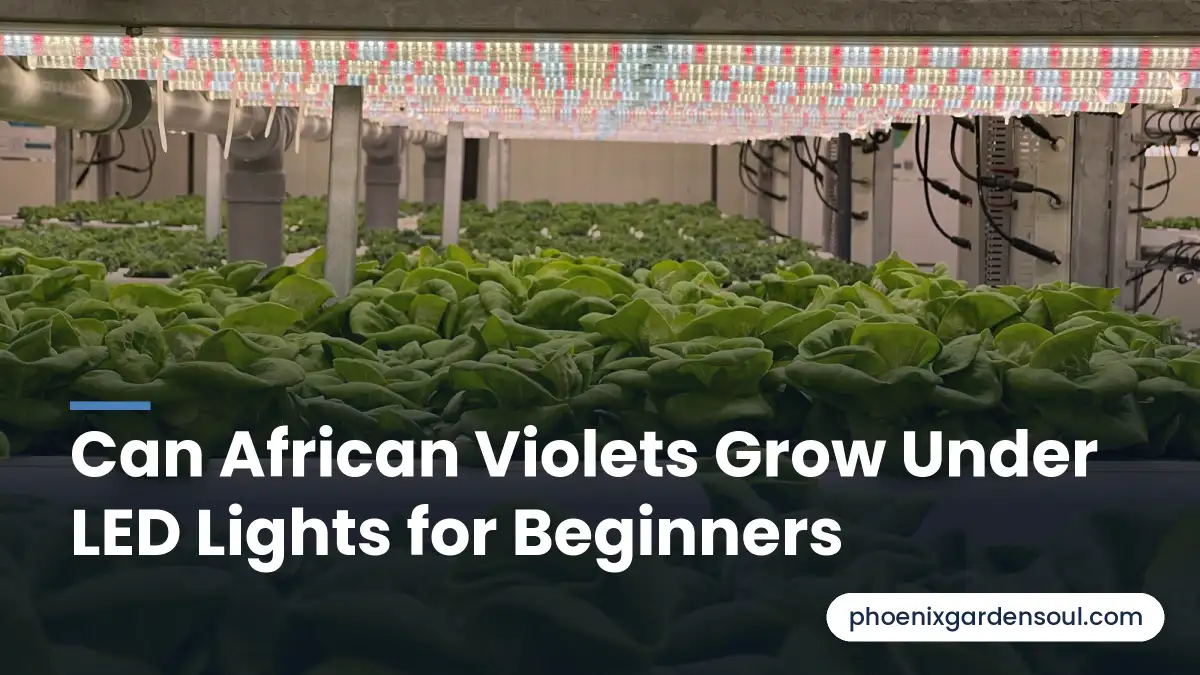
Can African Violets Grow Under LED Lights for Beginners
As an Amazon Associate we earn from qualifying purchases. Guides are for general information; always check your owner's manual and consult a qualified mechanic when unsure.
African violets bring bright blooms to dim rooms. Many growers ask if can african violets grow under led lights. The short answer is yes, they can thrive. But you must get the light right. LEDs give off low heat and fit small spaces. They also save power compared to old bulbs.
Still, not all LEDs work for Saintpaulia plants. You need the right spectrum, distance, and hours. This guide walks you through what works best. We will look at light colors, strength, and timing. You will learn how to spot problems early too. Always follow official safety and maintenance guidelines for best results.
Growing violets under LEDs is a smart move. It gives you control over light all year long. You can place fixtures on shelves or desks. This works well in flats and homes. But a wrong setup can burn leaves or stop blooms. Let us fix that with clear, simple steps. You will feel sure about your setup fast.
Can African Violets Grow Under LED Lights: Essential Steps for Success
Yes, african violets can grow under led lights with the right setup. Start with a full-spectrum LED panel. These lights copy natural sun better than cheap bulbs. Place the fixture about 12 to 18 inches above the plant.
Check the leaves each week for color changes. You want soft, medium green leaves. Dark green can mean weak light. Light green or white edges can mean burn. For complementary picks and expert testing advice, see our guide on Are Snails Bad for the Garden Tips and Best Practices.
Use a simple timer to control the light hours. Set it for 12 to 14 hours per day. Keep the cycle steady every single day. African violets need long days to bloom well. The light should feel bright but not harsh. If you hold your hand under the lamp, it should feel warm, not hot. A good fixture also saves energy and lasts for years.
- Full-Spectrum LED: Pick panels with both red and blue wavelengths. These drive leaf growth and flower set.
- 12 to 18 Inch Gap: Keep the light this far from leaves to avoid burn.
- Daily Timer: Use a digital timer for 12 to 14 hours of light each day.
- Leaf Color Check: Look weekly. Medium green means the light is just right.
One thing that trips up new growers is wattage. High wattage does not always mean better light. It often means too much heat close up. Start with a lower watt LED and move it closer if needed. Watch how the plant responds over two weeks. Slow, steady growth is the sign you want.
Add a small reflective surface under the light. A white tray or foil bounce board helps. It sends extra light back up to the lower leaves. This keeps the whole plant lit evenly. You will see fewer weak, stretched stems when you do this.
Decoding Light Spectra: Why Red, Blue, and Far-Red Leds Matter for African Violets
Light is not just white or yellow. LEDs give off specific color bands. Each band does a different job for plants. Blue light at around 450nm helps leaves grow strong.
It keeps stems short and compact. Red light near 660nm pushes the plant to bloom. It triggers the hormones that form flower buds. Without enough red, your violet may stay leafy but never open buds.
Far-red light at 730nm is also key. It works with red light to set the bloom cycle. Too much far-red can make stems stretch out. That weak growth is called etiolation.
You want a balanced mix of red and blue first. Then add a small amount of far-red. This ratio helps your violet stay tight and bushy. It also encourages repeat blooming over many months.
- Blue Light (450nm): Drives leaf growth and keeps plants compact and sturdy.
- Red Light (660nm): Triggers flower bud formation and boosts bloom count.
- Far-Red (730nm): Helps set bloom timing. Use sparingly to avoid stretch.
- Full-Spectrum Mix: A balanced panel gives all bands in one fixture.
You do not need to buy separate red and blue bulbs. Many modern LED bars blend these colors well. Look for lights labeled full-spectrum or bloom-boosting. Cheap white LEDs often lack the red spike plants need. Check the product specs if you can. The goal is a light that feels like a bright morning sun. Your violet will tell you by the way it grows.
Measuring Success: Par, Ppfd, and Lux Requirements for Saintpaulia Under Leds
To know if your light works, you need to measure it. Plants use light for photosynthesis. The right measure is called PAR. PAR stands for photosynthetically active radiation. It covers the light wavelengths plants actually use. Not all light a bulb gives off counts as PAR. Some is wasted heat or color we can see but plants cannot use.
PPFD measures how much PAR reaches the leaves. It is given in micromoles per square meter per second. African violets do well with a PPFD of about 50 to 150. Lux is another measure you can use.
A simple lux meter works for home growers. Aim for about 500 to 1000 lux at the leaf surface. If your light gives less, the plant may stretch. If it gives more, you risk leaf burn.
- PAR (Photosynthetic Active Radiation): The light range plants use for food making.
- PPFD Target: Keep levels between 50 and 150 at the leaf surface.
- Lux Reading: Aim for 500 to 1000 lux for healthy, compact growth.
- Hand Test: If your hand feels hot under the light, move the fixture up.
You do not need fancy gear to start. A cheap lux meter from a store works fine. Hold it right at the soil level. Move the light up or down until you hit the right range. Check this every few months too. As LEDs age, their output can drop. Keeping the distance and readings in check helps your violet bloom strong for a long time.
Preventing Leaf Burn and Etiolation: Common LED Failure Points for African Violets
Too much light harms your plants fast. You can see scorch marks on leaves. That looks like pale or brown patches. The cells die when light hits them too hard. You must watch your plants each day. Look for signs of stress early.
Etiolation shows up in a different way. Your violet stretches tall and thin. The stem gets long and weak. Leaves turn pale green or yellow. The plant reaches for more light. This happens when light is too low. You need to fix this fast.
- Light Distance: Keep your LED fixture 12 to 18 inches above the leaves. Closer lights burn the plant faster. You can raise the light if you see burn signs.
- Look at Leaf: Look at leaf color each morning. Healthy leaves show deep green. Yellow or white tips mean light is too high.
- Heat Watch: Touch the leaves after the light has been on for two hours. Warm leaves mean the fixture is too close. You need to adjust the height.
- Gradual Moves: Never shift the light far in one day. Move it a few inches each day. This lets the plant adjust without shock.
African violets need steady, soft light. When you can african violets grow under led lights, the setup matters a lot. A bad light placement causes more harm than no light at all. You must balance bright light with safe distance.
Tools and Setup: Choosing the Right LED Fixture, Reflective Surfaces, and Timers for Violets
You need the right gear to grow violets well. A good LED fixture makes all the difference. Cheap lights often lack the right spectrum. They may also burn out fast. Look for full-spectrum LEDs made for plants. These lights give red and blue rays your plants need. You will see better blooms with them. For complementary picks and expert testing advice, see our guide on Are Powdery Mildew Harmful to Plants for Beginners.
Reflective surfaces help you get more from your light. Mylar sheets bounce light back to the leaves. They cost very little and work well. You can also use white paint on walls. This spreads light evenly around your plants. A small grow tent works great too. It keeps light inside where it belongs.
A simple timer outlet adds big value. You set it to turn the light on and off. Your plants need a steady day and night cycle. This keeps their internal clock working right. You do not need to wake up to flip a switch.
- Full-Spectrum LED: Pick a fixture with a mix of red and blue LEDs. This covers the main needs of your violet’s leaves and blooms.
- Reflective Mylar: Line the inside of your grow space with Mylar sheets. It bounces stray light back to the plant canopy.
- Digital Timer: Set the timer for 12 to 14 hours of light each day. This gives your violet a steady photoperiod without guesswork.
- Dimmer Switch: Use a dimmable LED fixture when you can. It lets you lower the light if your violet shows stress signs.
When you set up your lights, start with the distance rule. Place the LED 12 to 18 inches above the plant top. Check the leaf color after one week. You can move the light closer if growth looks weak. You can raise it if leaves look pale or burned.
You can african violets grow under led lights with a smart setup. The right fixture, a reflective surface, and a timer work together. Each part plays a role in healthy growth. Start simple, watch your plants, and adjust as needed.
Comparing LED Setups for African Violets
Not all LED setups work the same way. A panel light spreads light over many plants. A bar light fits tight shelves. A clip-on spot light works for single plants. Each type has its own use. Let us look at how they compare.
- Panel Lights: Panel lights give wide, even coverage.
- They Work Well: They work well for shelves with several pots.
- Bar Lights: Bar lights are long and low profile.
- They Fit: They fit under cabinets or narrow spaces.
- Clip-On Spots: Clip-on spots work well for a single plant on a desk.
- Aim the Light Where: You can aim the light where it is needed most.
You should also think about the driver. A good driver keeps the current steady. It stops light flicker that can stress plants. Cheap drivers may fail fast. They can also cause light spikes. These spikes harm leaves over time.
Here is a simple way to pick. Match the fixture to your space. Use panels for wide areas. Use bars for long rows. Use spots for single plants. Add a dimmer to each setup. This gives you room to adjust. Watch your plants and change the setup if needed.
Common Questions About Growing African Violets Under Leds
Can African Violets Grow Under LED Lights If I Use a Fixture Meant for Vegetables?
You can, but you must check the spectrum. Veg lights often push far-red light. That helps leafy greens grow tall. Violets need more blue light for compact growth. You may need to add a blue-rich panel. Watch your plant for stretch or burn signs.
How Many Hours of LED Light Do African Violets Need Each Day?
- Give Your Violet: Give your violet 12 to 14 hours of light each day.
- That Matches: That matches a natural day length.
- More Than 16 Hours: More than 16 hours can stress the plant.
- Less Than 10 Hours: Less than 10 hours may stop blooms.
- Timer Keeps This: A timer keeps this cycle steady for you.
Do LED Lights Get Hot Enough to Burn African Violet Leaves?
Most LEDs stay cool to the touch. But the light they give off can still burn leaves. This happens when the fixture sits too close. You need to check the distance often. A simple hand test works well here.
What Is the Best LED Color for African Violet Blooms?
Red light at 660nm helps your violet form buds. Blue light at 450nm keeps the leaves thick and short. You want both colors in your fixture. A full-spectrum LED covers this mix well. You do not need to buy separate colored bulbs. For complementary picks and expert testing advice, see our guide on Are Garden Lizards Dangerous Tips and Best Practices.
Can I Use a Regular LED Bulb From My House to Grow Violets?
A regular LED bulb gives some light. But it lacks the right red and blue mix. Your violet may grow but will not bloom well. You are better off with a plant-specific LED. It costs a bit more but gives much better results.
Seasonal Adjustments and Dormancy Light Tips for African Violets
African violets do not truly go dormant. But they slow down in short winter days. You must adjust your light hours then. Start by adding one extra hour of light each week. This helps the plant ease into the change. Do not jump from 10 hours to 14 hours fast. A slow shift keeps the plant calm.
- Also Need: You may also need to move the fixture closer.
- Winter Air: Winter air is dry and cool.
- Leds Do Not: LEDs do not heat the room much.
- Plant May Need: The plant may need a bit more light to stay compact.
- Watch the Leaves: Watch the leaves closely.
- If They Stretch: If they stretch, the light is too far.
- If They Fade: If they fade, the light is too strong.
Some growers use a second light in winter. This adds a gentle boost. It works well in rooms with north-facing windows. You can set a second light on a timer. Let it run for two extra hours in the evening. This mimics a longer summer day. Your violet may bloom again with this trick.
In summer, you may not need extra light. Natural light from a window can add to the LED. Check the total hours. If the sun adds four hours, you can cut the LED time. This saves power and keeps the plant happy. Always keep the total in the 12 to 14 hour range.
| Setup Type | Best For | Light Distance | Key Benefit |
|---|---|---|---|
| Full-Spectrum LED Panel | Single plant or small shelf | 12–18 inches | Balanced red and blue light |
| LED Strip Lights | Multiple plants in a row | 6–12 inches | Easy to install and adjust |
| Dimmable LED Fixture | Plants showing light stress | 15–20 inches | Lets you lower intensity fast |
| Mylar-Lined Grow Tent | Space with outside light leaks | 12–18 inches | Boosts light reach to all leaves |
Final Verdict and Buying Advice
Growing African violets under LED light works well when you keep things simple. You need the right spectrum, the right distance, and a steady timer. Watch your plants each day for signs of stress. You will learn what your violet needs fast. Small changes make a big difference over time. You do not need expensive gear to get good results.
When you can african violets grow under led lights, you gain control over their growing season. You can give them light all year long. This leads to more blooms and fuller plants. Start with one fixture and one small space. See how your violet responds in two weeks. Then adjust the distance or time as needed. Your plants will show you the way forward.
Buy a full-spectrum panel or bar light first. Add a timer and a dimmer next. Use Mylar or white paint to boost light. Keep the fixture 12 to 18 inches up. Check the leaves each week for color shifts. These simple steps will give you strong plants and bright blooms. A good LED setup can last for years. It will serve your violets well with little care.






3 Comments